The $12 Plate That Ends the Second-Helping Standoff: A Week of Compartment Dinners

Photo: Lizars, William Home, 1788-1859 Lizars, Daniel, Public domain, via Wikimedia Commons
There's a moment that happens at most American dinner tables. The platter comes around, you take a scoop, the platter keeps circulating, and twenty minutes later you're not sure whether you ate one serving of rice or three. Nobody at the table was hungry enough for seconds — the food was just there.
In Japan, that moment rarely happens, and it's not because of willpower. It's because of the plate.
Why the Serving Dish Decides Everything
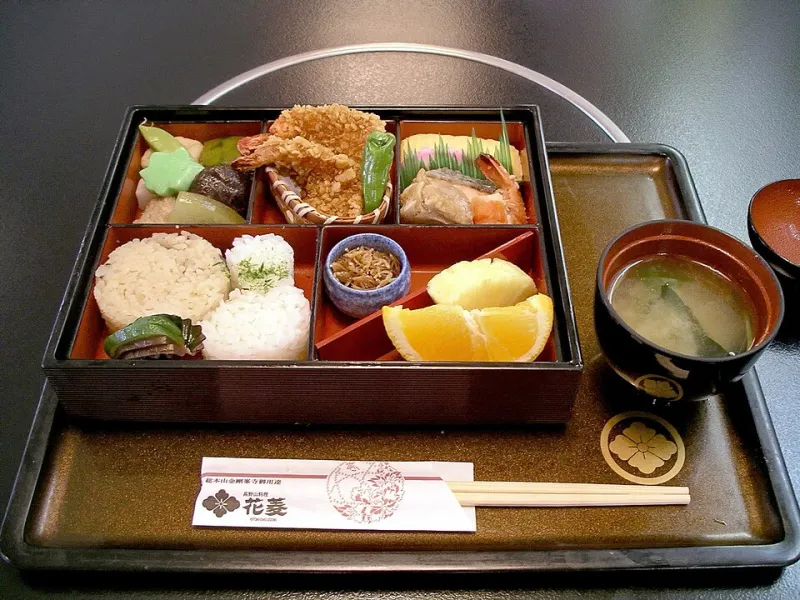
Japanese home meals — whether in a lacquer bento box or on a tray of small dishes — arrive already portioned. Rice gets its bowl. Protein gets its space. Vegetables get their corner. Pickles get a tiny dish that looks almost decorative. Nothing is served family-style from a mountain-sized platter, so there's no visual cue telling you to keep scooping.
Compare that to the standard American setup: one giant plate, three serving dishes within arm's reach, and a casserole dish still steaming on the table. Researchers who study eating behavior call this environmental cueing. The rest of us call it 'why am I so full.'
The good news is you don't need to ship anything from Tokyo. You need a divided plate — the kind sold at Target, Walmart, or any dollar store for around $12 or less — and one week of willingness.
The Rules of the Divided Plate
The setup is simple, and it borrows the balance logic of a traditional Japanese meal (what's called ichiju sansai — one soup, three dishes):
- Half the plate: vegetables. Any kind. Roasted, steamed, tossed in sesame dressing — frozen counts.
- One quarter: protein. Fish, chicken, tofu, eggs, whatever Tuesday allows.
- One quarter: rice, noodles, or bread.
- Plus one small dish: something pickled, fermented, or acidic. A few pickle slices, kimchi, or even a splash of rice vinegar on cucumbers.
The small dish matters more than it sounds. That hit of acidity resets your palate mid-meal, which slows you down naturally — no app, no timer, no counting.
The Seven-Day Experiment
Here's exactly what we tried, and what you can try too:
Days 1–2: Serve dinner only on divided plates. Keep the serving dishes in the kitchen, not on the table. Notice how many times you reflexively reach for a refill that isn't there.
Days 3–4: Fill the vegetable half first. This is the trick — most of us plate the protein and starch, then squeeze in a sad spoonful of broccoli. Reverse the order and the balance fixes itself.
Days 5–6: Add the small acidic side dish. Store-bought pickles are fine. So is a quick cucumber salad with vinegar and a pinch of sugar made while the rice cooks.
Day 7: Let everyone plate their own compartments — including kids. There's something about a defined space that makes children actually fill it with vegetables. We can't fully explain it. We can confirm it.
What Actually Changed
A few honest observations from the week:
The kitchen trip replaced the second helping. Walking to the counter for a refill added just enough friction that most of us skipped it. Not always. But usually.
Leftovers stopped vanishing. With platters staying in the kitchen, half a casserole survived to become tomorrow's lunch — a small grocery budget win nobody expected.
Dinner felt more finished. A plate with distinct compartments reads as a complete meal in a way an overflowing dinner plate doesn't. When the compartments were empty, the meal felt done. No grazing afterward.
Nobody felt deprived. This is the part worth emphasizing. Nobody measured, weighed, or tracked anything. The plate did the portion control quietly, the way it's been done in Japanese home kitchens for generations.
Start With One Plate
If a full household conversion feels like too much, start with yours. One divided plate, one week, dinner only. The worst case is you eat the same food off a different dish. The best case is you discover what millions of Japanese households already know: the easiest way to eat better isn't more discipline. It's a smarter container.
Your $12 is waiting at the store. The casserole dish can stay on the counter — as a centerpiece, not a serving line.