Three Minutes of Waiting: What a Walk-Up Vending Machine Knows That Your Delivery App Doesn't
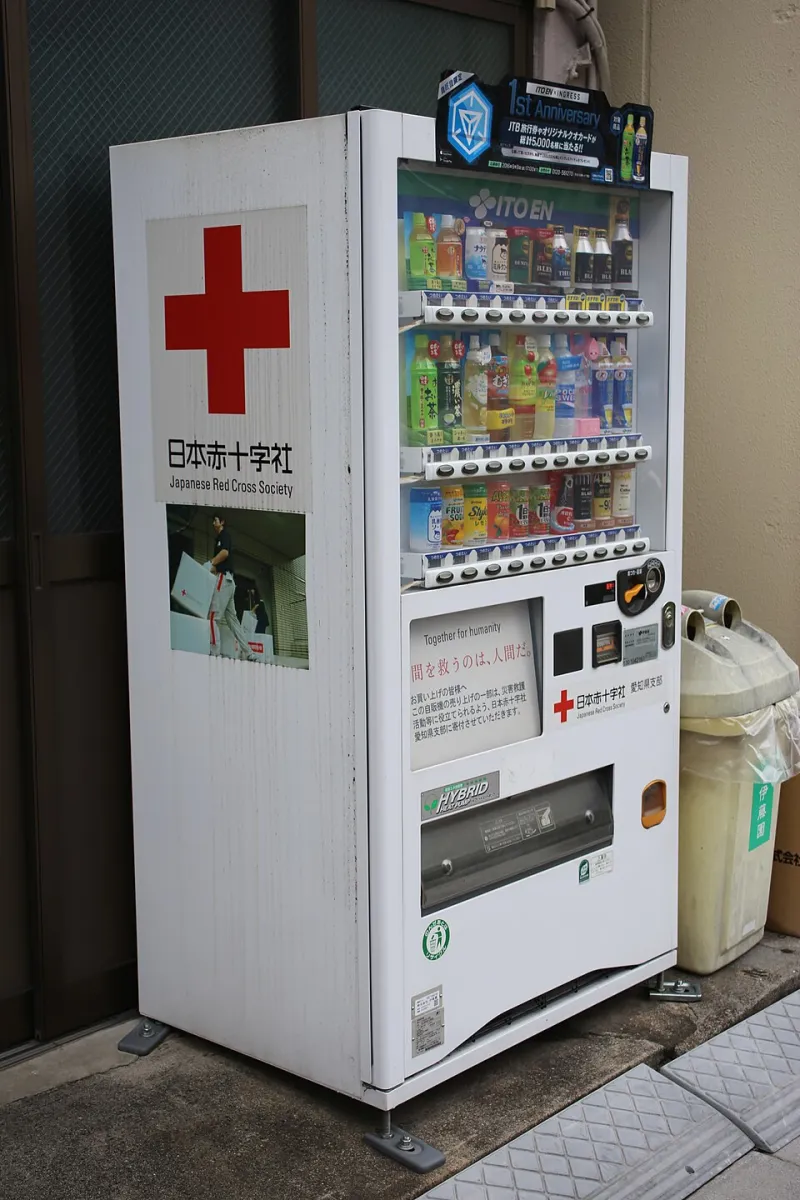
Photo: 円周率3パーセント, CC BY-SA 4.0, via Wikimedia Commons
There's a vending machine in most Japanese neighborhoods that has no drive-thru lane, no app, no curbside pickup. If you want the cold green tea inside it, you walk up, dig for coins, press the button, and stand there while the can thunks down. It takes maybe ninety seconds. Somehow, those ninety seconds do more work than they get credit for.
Meanwhile, in America, we've spent the last decade engineering waiting out of existence. The drive-thru hands you a burrito without unbuckling your seatbelt. The delivery app brings ice cream to your door before your show's credits finish rolling. It's convenient. It's also, if we're honest with ourselves, a little bit of a trap.
The Case for Good Friction
Here's the opinion part, stated plainly: not all friction is bad. Some friction is the gap where better decisions happen.
When a craving has to travel through your body, down the driveway, and around the block, it has time to either strengthen or dissolve. Psychologists who study impulse behavior have long noted that urges tend to crest and fade within minutes — which is why the classic advice to "wait ten minutes" before giving in actually works for a lot of people. The problem is that modern American convenience is specifically designed to prevent that wait. The craving never gets a chance to pass because relief arrives before it can.
The Japanese walk-up model — the vending machine on the corner, the konbini two blocks away — builds the wait back in. You have to put on shoes. You have to cross a street. You have to stand outside in whatever weather is happening. None of this is marketed as mindfulness. It's just how the infrastructure works. But the effect is a tiny built-in cooling-off period between wanting something and getting it.
We're not suggesting Japan is some friction paradise — Japanese convenience stores have their own mastered art of making impulse buys effortless once you're inside. The difference is the approach: you still have to arrive on foot.
What This Looks Like in an American Week
You can't redesign your suburb, and nobody's asking you to. But you can re-add small delays on purpose. Here's a one-week experiment we've been kicking around the KureKinn office:
Day 1–2: The parking rule. If you're craving fast food, you can still have it — but you must park, go inside, and order at the counter. No drive-thru. For most people, this adds five to eight minutes and one decision point where you're standing in line instead of idling behind a car.
Day 3: The two-block rule. Whatever the craving is, the nearest option has to be at least a short walk away. If the ice cream is in your freezer, that's fine — walk around the block first, then decide. You'd be surprised how often the round trip settles the question.
Day 4: The three-minute timer. Before opening a delivery app, set a three-minute timer and do something else — rinse a dish, step outside, refill your water. If the craving survives the timer, order. If not, you just saved thirty dollars.
Day 5: The konbini walk. Pick a small errand — a drink, a snack, a stamp — and walk to the nearest store to get it instead of ordering it or stocking up at the big weekly haul. Treat the walk itself as the purchase.
Day 6–7: Audit. Notice which rules felt annoying and which felt good. Keep the ones that felt good. Drop the rest without guilt.
Why This Isn't About Willpower
We want to be careful here, because this is not a piece about denying yourself things. If you want the burrito, eat the burrito. The point of good friction isn't restriction — it's making sure the decision is actually yours, made at full speed, rather than an automatic response to a notification or a red roof on the horizon.
Think of it like the difference between sipping hot tea slowly from a warm can on a cold day and chugging something through a window without turning off your engine. Same calories, completely different experience. One of them you remember. The other one is just fuel delivery.
Japanese wellness traditions — from mindful eating practices to the simple ritual of tea — tend to share this DNA: insert a small, deliberate pause between impulse and action. The vending machine is basically that philosophy in steel and coin-slot form.
The Cheapest Wellness Upgrade Available
No supplement, no app subscription, no meal plan. Just a few minutes of walking and standing, added back where convenience removed them. If it curbs one impulse order a week, you've saved money and probably walked an extra mile. If it doesn't, you've spent a week testing your own habits, which is never wasted time.
The drive-thru will still be there. It's not going anywhere. But for one week, make it come to you the long way.