One Basket, Thirty Days: What Happened When I Shopped Like a Japanese Grandmother at a Kroger in Ohio
The shopping cart at my local Kroger has a mind of its own. I show up with a list of eleven items and leave with forty, because the cart is big, the week is long, and apparently I can't be trusted near the snack aisle. Sound familiar?
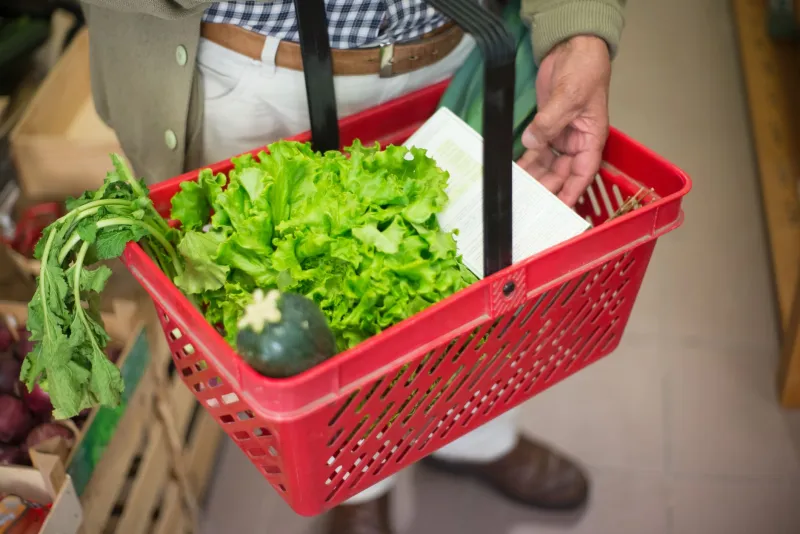
In Japan, most households shop differently. The standard-issue store basket is deliberately small — roughly the size of a large mixing bowl — and many people carry it by hand rather than pushing anything at all. The result is built-in portion control for your groceries: if the basket is full, you're done. Combined with the habit of shopping fresh almost daily, it means Japanese kitchens tend to hold only a few days of food at a time.
I wanted to know if that logic could survive a suburban American supermarket. So for thirty days, I retired the cart, grabbed a hand basket, and shopped small and often. Here's the honest ledger.
The Rules I Set for Myself
- One basket per trip. If it didn't fit, it didn't come home.
- Shop four to five times a week instead of one big Sunday run.
- Track everything — total spend, impulse purchases, and anything thrown away.
For comparison, my baseline was ugly: our household of three averaged about $215 a week on groceries, and I'd estimate a third of our produce died in the crisper drawer before anyone ate it.
Week One: The Withdrawal Period
The first few days felt genuinely inconvenient. I'd built my whole routine around the mega-haul — the list, the meal plan, the ritual of loading the trunk. Shopping daily meant standing in the store at 5:40 PM trying to answer the question Japanese shoppers answer automatically: what are we eating tonight, and maybe tomorrow?
My first instinct was to overfill the basket anyway, cramming in a backup head of lettuce "just in case." By Thursday I caught myself and stopped. The basket wasn't the constraint. My anxiety about running out was.
Week one spend: $68. Notably, zero impulse buys — because there was no room for them and no "it's for later" logic to justify them.
Week Two: The Freezer Stops Being a Cemetery
Here's what nobody tells you about the weekly haul: it turns your freezer into a guilt archive. Half a bag of freezer-burned peas, one sad pork chop, a brick of spinach from a recipe you abandoned.
Shopping small killed that cycle. I bought exactly what we'd cook within a day or two, so food moved in a straight line from store to counter to plate. My 9-year-old started eating more vegetables, and I suspect it's because the broccoli in the fridge was three days old, not ten — it actually tasted like something.
There's a quiet Japanese principle underneath this: food is at its best immediately, and every hour in storage is a small decline. When you shop daily, you're always cooking at the peak, not the bottom of the curve.
The Money Math
I expected daily trips to cost more — more gas, more temptation, more fees of convenience. The opposite happened.
- Weekly average (weeks 2–4): $152, down from $215.
- Food waste: near zero. I threw away a heel of bread and half an onion in the entire month.
- Impulse purchases: two total — a chocolate bar and a bag of chips, both eaten, neither regretted.
The savings came from three places. First, no stockpiling, which at my house means duplicate purchases. Second, sales items only went in the basket if we needed them that day, so "deals" stopped manufacturing demand. Third — and this is the big one — I stopped ordering takeout on Wednesdays, because there was always something fresh in the fridge ready to cook. That alone was worth about $35 a week.
The Unintended Benefits Nobody Puts on a List
Daily shopping turned out to be a movement habit in disguise. Four short walks a week, a basket in hand, an extra couple of miles I never would have logged. It also changed my relationship with the store itself. Instead of a dreaded weekly siege, it became a ten-minute errand — a small, low-stakes outing that broke up the workday.
And dinner got better. When you buy for tonight, you buy for tonight. I started asking the family what they wanted instead of defrosting whatever the meal plan demanded. Meals became conversations instead of logistics.
The Honest Drawbacks
Let's not romanticize this. Daily shopping costs time — maybe 45 extra minutes a week all-in, more if your store isn't close. Bad weather weeks are miserable. And if you live in a food desert or your nearest full supermarket is a 25-minute drive, this model simply doesn't work, and the weekly haul is the right call.
There's also a real risk of buying less produce than you need and quietly running out. I hit that wall twice in week two before learning to keep a standing core list: eggs, milk, greens, tofu or chicken, one fruit.
How to Try It Without Going Full Tokyo
You don't need to shop every day to steal the useful parts:
- Ditch the cart for a hand basket on your next trip. Just this. Watch what happens to your total.
- Split your weekly run in two — half on Sunday, half on Wednesday — so produce never ages more than four days.
- Shop with the meal, not the meal plan. Buy for the next 24–48 hours, not the next 168.
- Keep a five-item core list so quick trips stay quick.
The Verdict After 30 Days
The small basket didn't just save me roughly $250 over the month. It changed what eating at home feels like — fresher food, fewer decisions, a kitchen that isn't simultaneously overstuffed and empty. It reframed grocery shopping from a logistics chore into something closer to a daily wellness practice: a short walk, a small deliberate purchase, a dinner built around what's actually good today.
The Japanese shoppers I was copying figured this out generations ago, mostly without thinking of it as a hack. They just had small baskets. Turns out that was enough.