The Three-Week Ferment Experiment: What Happens When You Swap Pills for Japan's Living Pantry
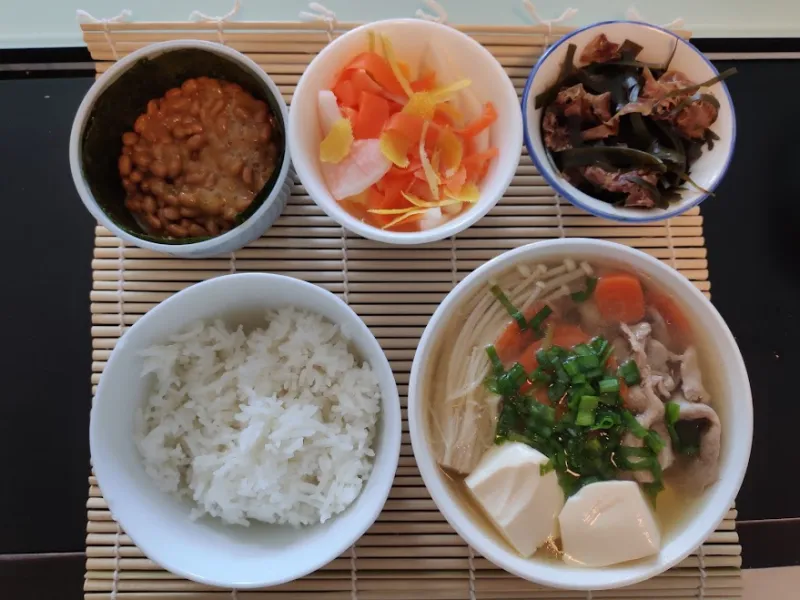
Photo: Leila Izachi, CC BY-SA 4.0, via Wikimedia Commons
Walk down the supplement aisle at any Walgreens and you'll find shelf after shelf of probiotic capsules, digestive enzyme blends, and B-complex gummies. Americans spend billions a year on these little bottles. Meanwhile, in Japan, the equivalent of a small pharmacy sits in the kitchen: a tub of natto, a tub of miso, a bottle of amazake.
The pitch of this article isn't "throw away your supplements." It's simpler: for three weeks, add one traditional Japanese fermented food per week and pay attention to what actually changes. Some of it will. Some of it won't. Here's the honest playbook.
Week One: Miso, the Gateway Ferment
Start with miso because it's the easiest to find. Every Kroger, Safeway, and even most Walmarts stock it near the tofu or in the international aisle. It's usually $3–5 for a tub that lasts a month.
Miso is fermented soybean paste — a living food containing lactic acid bacteria, enzymes, and a savory depth (umami) that makes cheap food taste intentional. The bacteria in miso aren't as well-studied as yogurt cultures, but the fermented soybean matrix itself has research behind it: studies out of Japan have associated regular miso consumption with better cardiovascular markers, though researchers caution that miso's high sodium means moderation matters.
The habit: one cup of miso soup a day. The critical detail — don't boil the miso. Boiling kills the live cultures. Dissolve a tablespoon into hot (not bubbling) broth at the end. Throw in whatever's around: leftover rice, frozen spinach, a cracked egg.
What to expect: mostly, you'll notice you're eating more vegetables and feeling more satisfied before lunch. The digestive effects at this stage are subtle.
Week Two: Koji and Amazake, the Sweet Side of Fermentation
Koji is the mold (Aspergillus oryzae) that makes miso, soy sauce, and sake possible — Japan's "national mold," and genuinely a workhorse. Its enzymes break down starches and proteins, which is why koji-aged foods taste so rich.
The most approachable koji product is amazake — a sweet, low-alcohol (or non-alcoholic) rice drink sometimes called "drinkable IV drip" in Japan because it's traditionally given to nursing mothers and hungover workers alike. The koji enzymes convert rice starch into simple sugars and B vitamins, no added sweetener needed.
You can find amazake at Whole Foods, Asian grocery stores like H Mart or Mitsuwa, or make it at home with a rice cooker and koji starter ordered online. Warm it like cocoa, dust it with cinnamon, or blend it into a smoothie.
What to expect: the B vitamin content is real, though modest — don't expect a caffeine-like energy jolt. What you'll notice more is the dessert replacement effect. A cup of amazake scratches the evening sweet itch for a fraction of the sugar of ice cream.
Week Three: Natto, the Final Boss
Natto — sticky, stringy fermented soybeans — is the most polarizing food in Japan. Even half of Japanese people don't love it. But it's also arguably the most nutritionally interesting: it's one of the richest food sources of vitamin K2 (from the fermentation process) and contains nattokinase, an enzyme that has been studied for effects on blood flow.
Here's the honest framing: nattokinase research is promising but mostly early-stage, and anyone on blood thinners should absolutely talk to a doctor before eating natto regularly — the K2 content interacts with medications like warfarin. The probiotic Bacillus subtilis in natto, on the other hand, is unusually hardy and survives stomach acid better than many capsule probiotics.
Find it in the freezer section of Asian groceries, or order chilled packs online. The classic preparation: stir it vigorously with the included mustard and soy sauce until it goes stringy, pile it on hot rice, top with a raw egg or sliced scallions if you're brave. Stirring more actually tames the flavor.
What to expect: a texture adjustment, definitely. But many people report genuinely improved regularity after a week or two of consistent fermented food intake — and that's the effect with the strongest scientific backing across all of these foods.
What's Research and What's Folklore
Let's separate the claims:
- Well-supported: Fermented foods in general are associated with improved gut microbiome diversity (a 2021 Stanford study showed measurable immune and inflammatory markers improved with a high-ferment diet). Regularity and digestion improvements are the most commonly reported and plausible benefit.
- Plausible but early: Nattokinase and cardiovascular effects; miso and blood pressure (complicated by sodium); koji enzymes and digestion.
- Mostly folklore: Any claim that these foods "detox" you, cure specific diseases, or replace medical treatment. Japan's longevity statistics come from a whole lifestyle — portion habits, walking, diet variety — not one magic bean.
The Budget Math
Compare three weeks of this experiment to the supplement aisle:
- Miso tub: ~$4 (lasts weeks)
- Amazake bottle: ~$5
- Natto packs: ~$3 each, three servings
Total: roughly $15–20 for a month of living fermented foods, versus $25–40 for a single bottle of probiotic capsules with no food attached. The fermented foods also bring protein, fiber, and actual meals along with the microbes — something a capsule can't do.
The Takeaway
You don't need to eat like a 90-year-old in Okinawa to benefit from this. One fermented staple per week, worked into meals you already make — miso in your morning broth, amazake as your evening sweet, natto over rice when you're feeling adventurous — is a sustainable way to get what the supplement bottles promise, in a form humans have actually been absorbing for a thousand years.
Start with the miso. See how week one feels. Your gut — and your grocery bill — will let you know.