The Mile You Never Count: What Train Platforms and Vending Machines Teach Us About Daily Movement
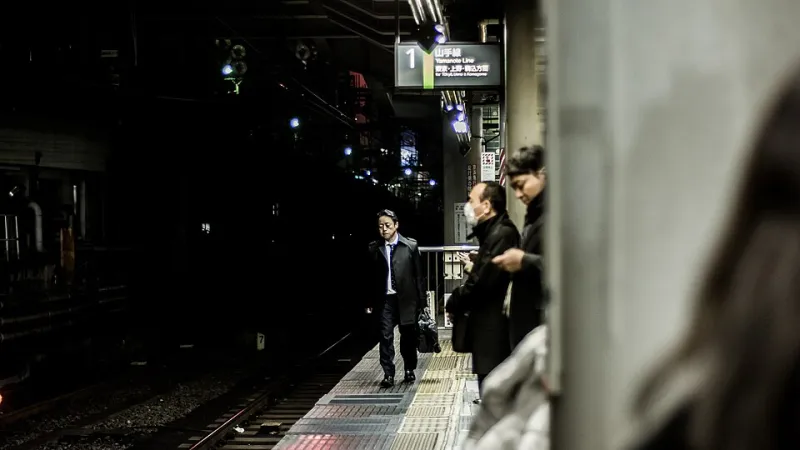
Photo: Redd Angelo reddangelo16, CC0, via Wikimedia Commons
Ask a Tokyo office worker about their exercise routine and you might get a shrug. No gym membership. No Peloton in the living room. And yet, chances are they logged more steps before 9 AM than most Americans manage all day.
The secret isn't discipline or some ancient wellness secret. It's architecture, habit, and a culture that never stopped treating walking as a normal part of being alive.
The Station Is the Gym
If you've ever navigated a Tokyo train station at rush hour, you know it's not a walk — it's an event. Shinjuku Station alone sees over three million passengers daily, and almost none of them take the escalator the whole way up. Long staircases are simply how you get places. And they're not gentle slopes; some of these climbs rival a StairMaster session.
Then there's tetsuko taiso — the group calisthenics routine set to a radio broadcast that has opened workdays in Japan since 1928. Factory workers, office staff, even schoolkids roll their shoulders and stretch in unison for three minutes. It's not intense. That's the point. It's a small, repeatable motion that signals: your body is part of today.
Add it up and the math gets interesting. Studies of Japanese commuters have found they routinely walk a mile or more just getting to and from transit, plus stairs, plus the walk to lunch, plus the stroll to a vending machine for an afternoon drink. Nobody calls this exercise. It's just Tuesday.
America's All-or-Nothing Problem
Here's where the cultural difference gets sharp. In the US, we've turned movement into a product. You buy the membership, block out the hour, change clothes, drive to the gym (yes, drive), work out, drive home, shower. It's a production. And when life gets busy — which it always does — the whole thing collapses. Zero workouts becomes three zero-workout weeks.
Meanwhile, the small stuff has been engineered out of American life. Suburbs are designed around cars. Drive-thru everything. Parking spots a few feet from the door. Elevators in two-story buildings. We've optimized away the very movements that keep a body humming, then wonder why we need to buy movement back in a dedicated facility.
The Japanese approach flips the script: don't chase one heroic hour of exercise. Instead, refuse to eliminate the small stuff. Walk to the store. Take the stairs because they're right there. Park at the far end of the lot on purpose.
The Science of Small
If this sounds too modest to matter, the research disagrees. Studies on non-exercise activity thermogenesis — NEAT, in the literature — show that everyday movement can burn hundreds of calories daily and, more importantly, keep your metabolism, circulation, and joints from going dormant. Sitting for eight straight hours, then hitting the gym hard for 45 minutes, doesn't fully undo the damage of stillness.
Frequent, gentle movement throughout the day does something a single workout can't: it keeps your body in motion mode. Blood flows. Muscles stay warm. Your lymphatic system — which has no pump of its own and relies on muscle movement — keeps working.
Building a Vending Machine Walk in America
You can't rebuild your suburb overnight. But you can borrow the mindset. A few swaps that cost nothing:
Create a destination. In Japan, the vending machine is a tiny errand — a reason to get up and walk 200 steps. Give yourself one. A drink in the office fridge two floors up. A water bottle you refill at the farthest faucet. Make your coffee run a lap around the block instead of a trip to the machine in the breakroom.
Take the stairs by default. Not as a fitness choice, just as the way up. If you work above ground level, commit to one flight before switching to the elevator.
Break up the drive. If your town is genuinely unwalkable, you can still park once and walk to multiple errands instead of re-parking at each storefront. Or pick the farthest spot, every time, without exception.
Add a morning three minutes. Channel the spirit of tetsuko taiso: before coffee, before the phone, stretch your arms, roll your shoulders, bend your knees. It's not a workout. It's a signal.
Walk during dead time. Phone calls, podcast episodes, waiting for the oven to preheat. Japanese commuters don't find extra time to move — they move inside the time they already have.
The Bigger Lesson
There's something quietly radical about the Japanese relationship with movement. It refuses to make exercise special. Walking to the corner for a canned coffee isn't a health achievement — it's just what people do. And that ordinariness might be its greatest strength. Habits that feel like chores get abandoned. Habits that feel like life just keep happening.
You don't need a train station, a gym, or a mile of vending machines. You need to stop treating small movements as beneath your notice. Because a mile a day, walked without ceremony, might do more for you than the workout you keep rescheduling.